Buy a Car With No Credit: How to Get an Auto Loan Without Credit History
Posted Wednesday, Jun 03, 2026
Buying a used car when you don’t have a credit history can feel overwhelming, but it’s a common challenge for first-time buyers, students, and newcomers. This guide explains how to buy a used car with no credit history, covering auto loan strategies, dealership financing, co-signers, and practical steps to get approved. With clear steps and the right preparation, you can get a car, build credit, and manage monthly payments responsibly.
How can a lender approve me to buy a car with no credit?
Getting approved by a lender when you have no credit history often depends on evidence beyond credit bureaus. Lenders look at proof of income, employment history, and your ability to make loan payments on time. Provide recent pay stubs, bank statements, and a solid employment record to demonstrate financial responsibility and strengthen your application for an auto loan without a credit history.
Consider credit unions and smaller local lenders who offer more flexible loan options and lower interest rates for buyers without credit. A credit union can be your best loan option because they often provide lower interest and friendlier loan terms to members, especially first-time car buyers or those trying to build credit.

What financing options exist for buying a used car without credit?
There are several car financing options for buyers without credit, including dealership financing, in-house financing, buy here pay here, and loans with a co-signer. Dealerships sometimes offer in-house financing for buyers without credit history, but these options often come with higher interest rates. Compare offers and read the loan term details, monthly payments, and whether payments on time will be reported to credit bureaus.
Secured credit cards and starter credit cards are additional tools to build credit while you manage loan payments. If you secure an auto financing agreement with reasonable monthly payments and make on-time payments, you’ll build a positive credit history and later qualify for lower interest rates and better loan options.
Should I use a co-signer to get a car with no credit?
Using a co-signer is one of the most effective ways to get approved for a car loan without credit. A co-signer with a strong credit history can lower the interest rate and increase the chance of loan approval. However, both parties must understand the responsibility: missed payments will affect the co-signer’s credit record and can create financial stress.
If you don’t have someone to co-sign, consider alternative loan options like credit unions or lenders that offer loan without a credit history programs. Saving for a larger down payment can also reduce loan amounts and monthly car payments, making approvals easier for buyers without credit.
How much should I save for a down payment when I don’t have credit?
Saving for a down payment is crucial when you don’t have a credit history. A larger down payment reduces the loan amount, lowers monthly payments, and may help you secure approval at a lower interest rate. Aim for at least 10–20% of the car purchase price, but even a modest deposit shows financial responsibility to lenders and dealerships.
Tips to save: set a specific savings goal, cut nonessential expenses, and consider short-term side income. Remember that a down payment combined with stable employment history and proof of income increases your chance of getting an auto loan without credit history and makes the car purchase more affordable.
What should I expect about interest rates and higher interest for buyers without credit?
Buyers without credit often face higher interest rates because lenders assume greater risk. Higher interest translates to higher monthly payments and a more expensive total cost of the car loan. Compare loan offers carefully, and ask lenders about loan term options and whether making payments on time will result in lower interest or refinancing opportunities later.
To counteract higher interest, consider: choosing a shorter loan term to pay less interest overall, making a larger down payment, or refinancing after you build credit and show a positive credit history. Lower interest rates become available as your credit score improves, so early on prioritize building credit by making consistent payments.
Can dealership financing help someone with no credit get a car?
Many dealerships have special programs for buyers without credit history, including in-house financing and buy here pay here options. These dealership financing programs may not require a credit score but often charge higher interest and may have stricter payment schedules. Ask the dealership if they report loan payments to credit bureaus—this helps with building your credit record when you make payments on time.
When working with used car dealers, get everything in writing and understand the loan options, fees, and monthly payments. Negotiating the purchase price and asking about any promotions or first-time buyer incentives can reduce the overall cost of owning a car and improve your financial outcome.
How can I build credit while paying off a car loan?
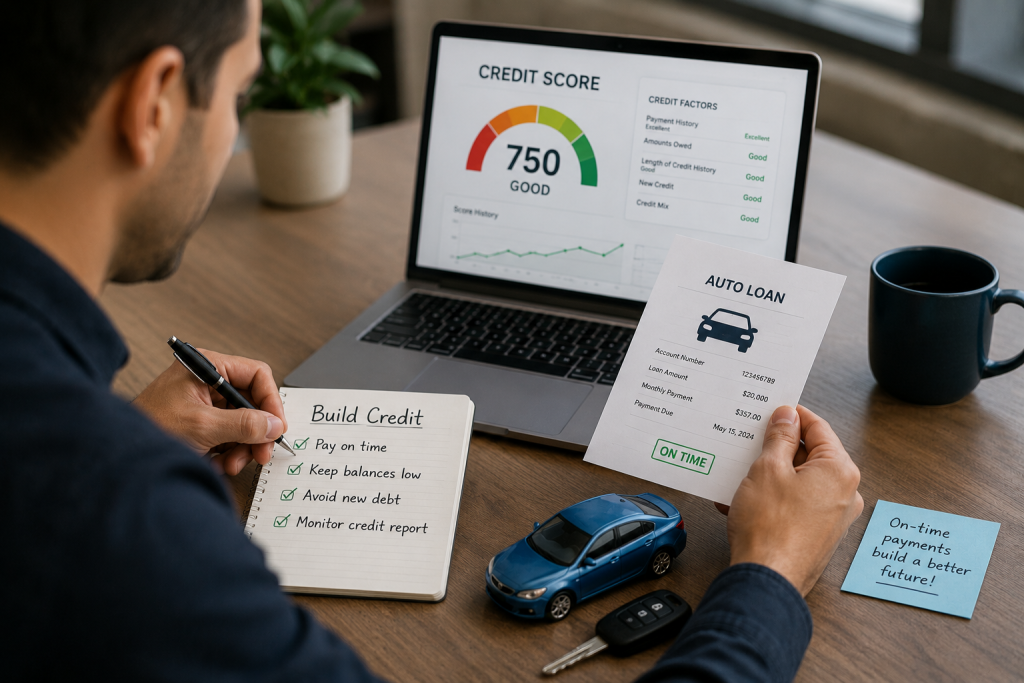
Making payments on time is the single most important factor in building credit. Ensure that your loan payments are reported to the three major credit bureaus so your positive payment history creates a credit record. Use automatic payments or reminders to avoid missed payments that would harm your credit score.
Supplement auto financing with credit-building tools like secured credit cards or a starter credit card. Use low balances and pay them off monthly to show responsible credit use. Over time, this combination of consistent car payment history and responsible credit card use builds a strong credit history and better loan options.
What documents do I need when applying for an auto loan without credit?
Prepare the following documents: proof of income (pay stubs or bank statements), proof of employment or employment history, a valid ID, proof of residency, and any down payment verification. Lenders will review your ability to make loan payments and may request a credit report if any existing records exist.
Also bring vehicle-related documents if you’re buying from a used car dealership: the car title, vehicle history report, and insurance information. Having all documents ready speeds up the approval process and shows lenders that you’re organized and ready to take on financial responsibility.
How can I choose the right used car dealer when I have no credit?
Choose a trusted used car dealership that provides clear financing solutions and assists customers with limited or no credit history. Research used car dealers by reading reviews, checking for certifications, and comparing loan offers. A trustworthy dealer will explain loan terms, interest rate details, and whether they offer in-house financing or partner with credit unions for better loan options.
Ask about used cars for sale that fit your budget, and request a vehicle history report. Negotiate the price, and avoid dealers that pressure you into high-interest in-house financing without exploring alternatives. A good dealership should help first-time car buyers find loan options that build credit rather than trap them with unsustainable payments.
When should I consider refinancing after getting a car with no credit?
Refinance your car loan when you’ve built a positive credit history and can secure lower interest rates. Typically, after 6–24 months of on-time payments your credit score may improve enough to qualify for better loan terms. Refinancing can lower monthly payments, reduce total interest paid, and shorten your loan term.
Compare loan options from credit unions, banks, and online lenders to find the best loan for your improved credit. Be mindful of refinance fees and ensure that the savings from a lower interest rate outweigh any costs. Refinance strategically to get a better loan and continue building strong credit history.
What practical steps can first-time car buyers take to succeed without credit?
Actionable steps include: save a larger down payment, gather proof of steady income, shop around at credit unions and multiple lenders, consider a co-signer if possible, and choose a reliable used car within your budget. Use a realistic budget calculator to estimate monthly payments and include insurance and maintenance costs in your planning.
Make payments on time, sign up for reporting to credit bureaus if the lender offers it, and consider credit-building tools like secured credit cards to create a positive credit record. These steps help first-time buyers transition from no credit to strong credit history while enjoying the benefits of owning a car.
Conclusion
How to Buy a Used Car With No Credit History is a realistic and actionable roadmap for buyers without a credit record. Start by preparing proof of income, saving for a down payment, and exploring lender options like credit unions, dealership financing, and co-signers. Make on-time payments, build your credit with responsible credit card use, and consider refinancing once you have a positive credit history.
For buyers researching pre-owned vehicles, working with a reputable used car dealership and used car dealers who offer transparent loan options can make the difference. If you’re in Florida, consider visiting Iron Cars Inc., a Used Car Dealership in Hollywood, FL, to explore used cars for sale, in-house financing options, and buyer-friendly loan terms. A reliable dealership can help buyers without credit secure a car loan, build credit, and enjoy the independence of owning a car.
FAQs: Buying a Car With No Credit History
- Can I get approved for an auto loan with no credit history?
Yes, lenders can approve you without a credit history by reviewing your income, employment stability, and ability to make monthly payments. Providing pay stubs and bank statements improves approval chances.
- What is the best way to finance a car with no credit?
Credit unions, dealership financing, and co-signer loans are the most common options. These lenders often consider factors beyond your credit score, such as income and financial responsibility.
- Do I need a down payment if I have no credit?
A down payment is highly recommended because it reduces the loan amount and increases approval chances. Even a small down payment shows financial commitment to lenders.
- Will my car loan help build credit history?
Yes, if your lender reports payments to credit bureaus, on-time monthly payments can help you build a positive credit history and improve your future credit score.
- Should I consider a co-signer for an auto loan with no credit?
Yes, a co-signer with strong credit can significantly improve approval chances and may help you get better interest rates. However, both parties are responsible for the loan.