How to Assess a Used Car During a Test Drive
Posted Thursday, Apr 02, 2026
For Hollywood car buyers, test driving a used car is one of the most important steps in deciding whether a pre-owned vehicle is right for you. Whether you're upgrading from a new car or shopping for your first reliable ride, the test drive helps you get a feel for the car, verify the engine and transmission, and confirm the overall driving experience. This guide explains how to evaluate a used car during a test drive with practical, region-aware tips that also help buyers in nearby areas like Hollywood, FL.
The following checklist and step-by-step advice will help you inspect the car, drive the car, and make an informed decision. We’ll cover what to check before you start, what to pay attention to while behind the wheel, and how to spot costly problems that may require a mechanic or further inspection.
Why is taking a test drive essential when purchasing a used car?
A thorough test drive is essential because photos and vehicle history reports only tell part of the story. Taking a test drive lets you experience the overall driving experience, listen for engine noise, feel how the transmission shifts, and test the brake response and steering wheel behavior in real conditions.
For car buyers and shoppers in Hollywood, FL, test driving a used car under local driving conditions—city streets, freeways, and stop-and-go traffic—gives a true sense of the vehicle’s condition and comfort. Skipping or rushing this step risks buying a used vehicle that needs unexpected repairs.

What should you check before starting a test drive?
Before you hit the road, do a quick walk around the vehicle and basic checks so your car test drive is efficient and effective. Use a simple checklist to keep from missing important exterior and interior signs.
- Inspect the exterior and interior for signs of rust, mismatched paint, dents, or bodywork that could indicate damage.
- Open the hood and pay close attention to the engine area—look for leaks, frayed belts, or fluid stains close to the engine.
- Check the windshield, wiper blades, headlights, and windshield wipers operation. Make sure the headlight lenses are clear and free from fogging.
- Check legroom, driver’s seat comfort, and adjust the seat so you can properly reach pedals and the steering wheel.
- Turn on the car and listen for odd engine noise or rattles. Test the infotainment system and dashboard lights.
Having a vehicle history report and knowing the VIN ahead of time can help you verify odometer readings and past incidents.
Benefits of test-driving a used car
The primary benefits of test driving a used vehicle include discovering hidden mechanical issues, ensuring the car meets your comfort expectations, and verifying that advanced safety features function correctly. You’ll also learn whether the used car is suited to your driving style and whether you can steer comfortably for long drives.
For local shoppers in Hollywood, FL, the importance of test driving grows when considering weather, road quality, and commuting distances. A good test drive helps you avoid wasting time on a car that fails in real driving conditions.
Step-by-step test drive guide: How to evaluate a used car during a test drive
How do you prepare to schedule a test drive?
Before you schedule a test drive, confirm the seller’s availability and set aside enough time for a thorough test drive. Bring your driver’s license and proof of insurance if required, and arrange for a friend or family member to join for a second opinion.
Print or save your checklist and vehicle history report. Ask the seller about recent maintenance and whether the car has had any major repairs done to the car.
What should you do in the first minutes of the test drive?
Start the engine and let it idle while you use all your senses to detect unusual engine noise, smoke, or smells. Observe dashboard lights and test the infotainment system and climate controls by turning on the air and heater.
Adjust mirrors, adjust the seat, and check that all gauges and warning lights behave normally. Confirm the brake pedal firmness and that the car is comfortable in the driver’s seat.
How should you test acceleration and transmission?
Accelerate at different rates—gentle, steady, and quick—to test acceleration response and see if the transmission shifts smoothly. Pay attention to delays, jerks, or slipping sensations from the engine and transmission during changes in speed.
Use highway speeds to let the transmission find its gear. Watch and listen closely for hesitation, hard shifts, or abnormal engine noise that could indicate transmission or engine problems.
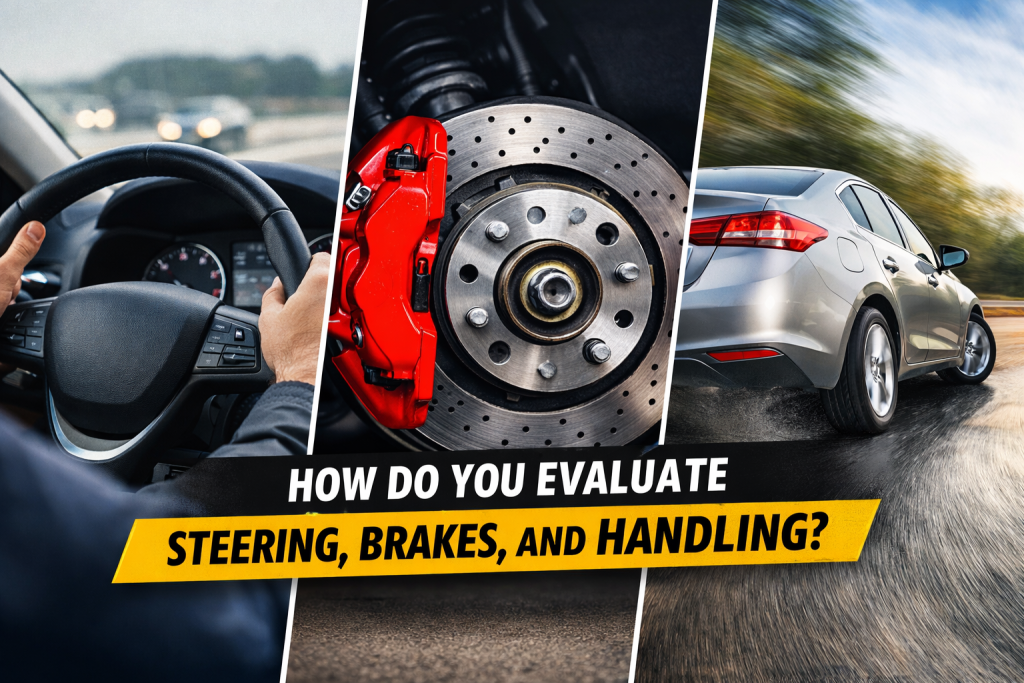
How do you evaluate steering, brakes, and handling?
Drive on a variety of roads. Test the steering wheel by driving straight in a long lane to check alignment and any sideways pull. Make a few turns to assess steering responsiveness and suspension comfort.
Test the brake at different speeds—light taps and harder stops—to ensure it stops in a straight line, and the brake pedal feels consistent. Listen for grinding or squealing and note any vibration under braking.
What should you check for noises and vibrations?
Be alert for rattles, knocks, or squeaks from the suspension, interior trim, or under the hood. Put the car over a speed bump or rough surface to evaluate suspension and look for unusual movements.
Note any vibrations in the steering wheel, pedals, or seat at different speeds, which can indicate tire balance, wheel alignment, or drivetrain issues.
What about testing safety and advanced features?
Check that headlights, turn signals, brake lights, and hazard lights work. Check that the seat belts retract smoothly and latch securely. Try any advanced safety features like lane assist or backup sensors, if present, to confirm they function properly.
For vehicles equipped with an infotainment system, test Bluetooth, navigation, and audio controls. Malfunctions here can indicate electrical problems.
How should you finalize your evaluation after the drive?
After the car test drive, perform a second walk-around to spot leaks or fresh drips from the engine or exhaust. Compare notes with your road impressions and record your impressions while they’re fresh.
If anything raised concern—unusual noise, fluid leaks, or inconsistent braking—consider having a trusted mechanic perform a pre-purchase inspection before committing to buy a used car.
Tips for test driving a used car: How to maximize your test drive
To maximize your test drive, plan a route that includes local conditions you regularly drive: freeway, surface streets, and rough patches. This way, you can assess the car’s performance in the same environments you’ll use it in Hollywood, FL.
- Bring your favorite playlist to test the infotainment at realistic volumes.
- Test the car at different speeds and under real load—take it with passengers if you usually travel with people.
- Don’t be afraid to drive the car aggressively for short bursts to test acceleration and the transmission—but stay safe and legal.
Use this time to make sure the used vehicle fits your lifestyle. Try getting in and out, check trunk space, and confirm the feel of the vehicle and legroom meet your needs.
Common mistakes to avoid when test-driving a used car
Buyers often make the mistake of rushing a test drive or not testing the car under varied conditions. Another frequent error is forgetting to inspect the car fully before driving, or skipping the vehicle history report and mechanic inspection.
Avoid relying solely on a short drive around the block. Not spending enough time behind the wheel can mean missing intermittent issues like heater problems, transmission hesitations, or electrical glitches in the infotainment system.
Smart Advice for Finding Affordable Used Cars on a Budget
If you're seeking an affordable used car, prioritize reliability and lower ownership costs. Look for models with good maintenance records and moderate mileage. Avoid cars with a history of major engine or transmission work unless priced accordingly.
Negotiate using your checklist findings and the vehicle history report. If minor repairs are needed—like wiper replacements, bulbs, or a simple tune-up—factor those expenses into your offer to keep the final purchase within your budget.
How can a mechanic help during a used car test drive?
Having a mechanic do a pre-purchase inspection is one of the best ways to protect your investment in a used car. They can check the engine and transmission, look for leaks, and test components close to the engine that you might miss during a normal test drive.
A professional inspection can reveal delayed issues and give you bargaining power. If the mechanic finds problems, you can request repairs or adjust your offer accordingly.
What are the essential tips to use all your senses during a car test?
Use sight to look for signs of rust, paint differences, and fluid leaks. Use hearing to detect unusual engine noise, creaks, or rattles. Smell can reveal burning oil, coolant, or exhaust odors. Touch helps you feel vibrations through the steering wheel or pedals.
Combining these observations helps you inspect the car more thoroughly and decide whether the used car is taking the road in a sound manner. Stay alert for any unusual signs or irregularities.
Common issues to watch for when test-driving a used car
Be alert for slipping clutch behavior (manual cars), hard or delayed shifts (automatic transmission), and uneven tire wear that suggests alignment issues. Watch for inconsistent brake performance or pulling to one side when braking.
Any persistent or loud engine noise, smoke from the exhaust, or unexplained dashboard warnings are red flags that should prompt additional inspection or a walk-away decision.
How to document impressions and follow up after the test drive
Record your impressions immediately—note acceleration feel, braking performance, steering behavior, and any dashboard lights. Photos of the exterior and interior, and close-ups of any concerns, can help when negotiating or comparing vehicles.
Follow up by reviewing the vehicle history report and scheduling a thorough test drive with different drivers if needed. If everything checks out, you’ll feel more confident to buy a used car or negotiate a fair price.
Frequently Asked Questions
How long should a test drive last when buying a used car?
A good car test drive should last at least 20–30 minutes to cover different driving conditions and speeds. Plan for extra time if you want to test specific features or have a mechanic perform a quick inspection.
What are the most important things to look for during a test drive?
Pay attention to engine noise, transmission shifting, brake feel, steering alignment, and any unusual vibrations. Test the infotainment system, lights, and safety features as well.
Should I get a mechanic to inspect the used car before buying?
Yes. Even after a solid test-drive, a professional inspection can uncover hidden issues in the engine and transmission or frame damage that you might miss during your own checks.
Can I test drive a car if I don’t have insurance or a license?
Dealerships and private sellers typically require a valid driver’s license and proof of insurance before allowing a test drive. Confirm requirements when you schedule a test drive.
Is it okay to drive the car aggressively during a test drive?
Short, legal bursts of acceleration are acceptable to test acceleration and responsiveness, but avoid reckless driving. Stay courteous, within speed limits, and focus on replicating the driving style you’ll use most.
Key takeaways
Test driving a used car is vital to making an informed decision. Use a clear checklist, inspect the exterior and interior, and spend time behind the wheel across varied roads to evaluate engine noise, transmission behavior, brake performance, and steering.
Bring a trusted friend, consider a mechanic inspection, and document your impressions. For car buyers and shoppers in Hollywood, FL, testing vehicles in local driving conditions is especially important to ensure the vehicle is right for your needs.
Conclusion
Knowing how to evaluate a used car during a test drive helps you avoid costly surprises and choose a reliable pre-owned vehicle. Follow this step-by-step guide, use the checklist, and pay close attention to the engine and transmission, brakes, steering, and comfort features like the infotainment system.
If you’re looking for an affordable used car and want expert help finding and evaluating vehicles in the Hollywood, FL area, consider contacting Iron Cars Inc. They can help you schedule a test drive, inspect used vehicles thoroughly, and find the best match for your needs.